
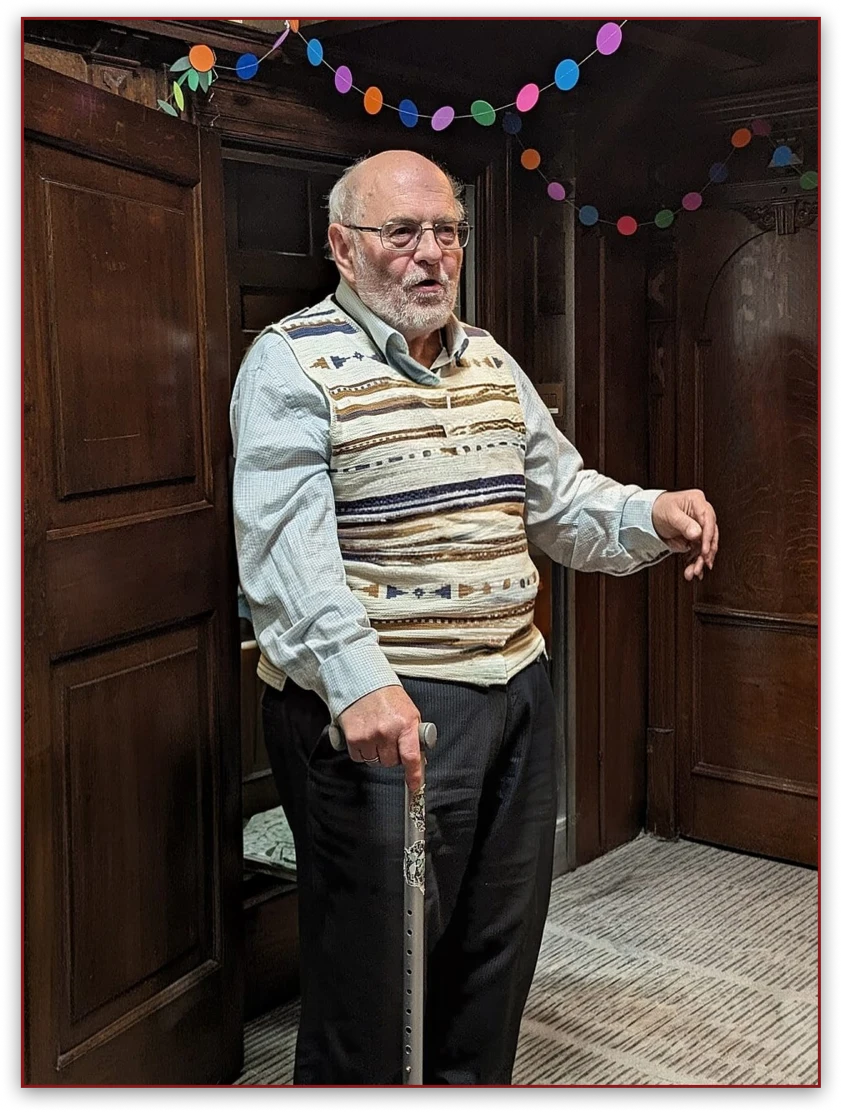
Ron Bailey is a campaigner, writer, and advocate for transparent governance. For more than four decades, he has worked at the intersection of public policy, accountability, environmental reform, and citizen engagement. His latest book, Institutionalised Deceit: Westminster Out of Governance, examines how political systems can drift away from the principles they are meant to uphold and explores the consequences for democracy, trust, and public participation.

Through personal experience and detailed case studies, Ron invites readers to look behind the headlines and understand how decisions are really made. His work challenges institutions to be more accountable while encouraging citizens to play an active role in shaping the future.
EXPLORE BOOKS

Born in March 1943, Ron Bailey has spent much of his life campaigning for openness, accountability, environmental protection, and democratic reform. His work has influenced debates on access to information, energy efficiency, public safety, and governance throughout the United Kingdom.

Over the years, Ron has worked with politicians from across the political spectrum, community organisations, environmental groups, and public-interest campaigns. His approach has always been rooted in the belief that informed citizens and transparent institutions are essential to a healthy democracy.

Institutionalised Deceit draws upon decades of experience navigating Westminster, government departments, and public campaigns. The book offers readers a unique insider perspective on how policy is shaped, how reform is achieved, and why accountability remains vital.

Bailey’s 1973 book The Squatters documented the British squatting movement[87] and was cited in studies of housing and urban protest.[88][89] He wrote The Homeless and the Empty Houses (1977),[90] which was praised during a House of Lords debate in November 1977 by Lord Soper,[91] and in 1994 he wrote Homelessness: What can be done?.[92] He published two reports with ShelterThe Grief Report (1972) with Joan Ruddock on how  homeless families were (mis)treated  by local authorities[93] and Bed and Breakfast (1974) with Mary Evans Young.[94]

In 1980, he wrote Dictators in the Town Hall, a critical study of local government secrecy and redevelopment plans in the London Borough of Redbridge, followed by three pamphlets the pamphlets Access to Local Government Information, Councillors Rights to Information and  Abolition of the Metropolitan Counties in 1983-4.[95]

Bailey contributed a chapter to The Secrets File (1984) which examined access to official information[96]

In 1992 he wrote the Green Party’s Policy Pathway Road to the Future.

In 2008 Bailey and critiqued the evidence base used by governments to justify new nuclear power stations in the report A Corruption of Governance?.[97][15]

2026, Bailey published Institutionalised Deceit,[4] an account of Westminster governance based on his experience campaigning for legislative and public policy reform. The book was endorsed by Oliver Letwin, who described him as “the most effective and relentless” campaigners he had encountered. One reviewer described it as “a practical exposé of how Westminster government operates”.[3]

INSTITUTIONAL ACCOUNTABILITY

Revealing how power operates behind closed doors.

DEMOCRACY REFORM

Transparency and participation for all.

Environment & Community

Protecting nature, empowering people.